What the bank sees in BIK, KRD, and ERIF before you say hello - and why 150 PLN ruins a 500,000 PLN loan.
May 2, 2026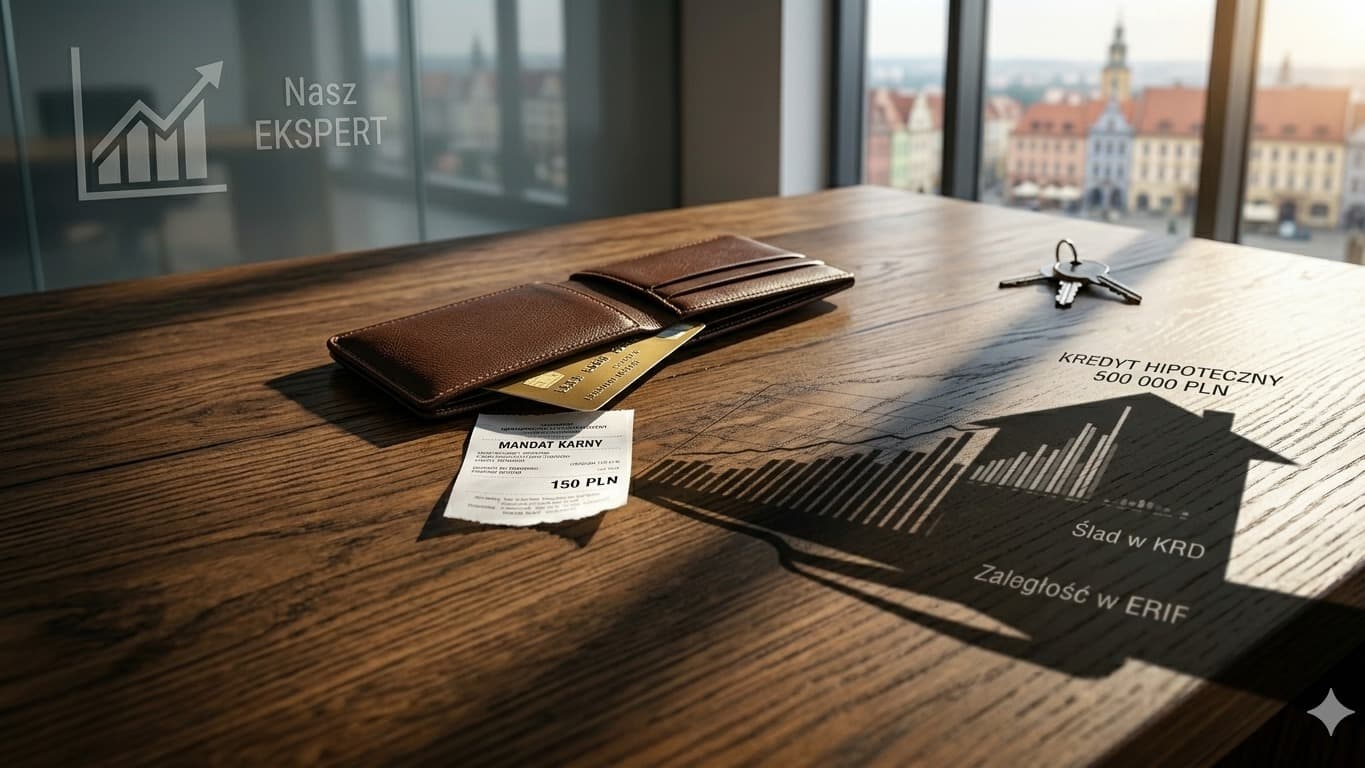
Do you think BIK is the only database the bank checks? It's one of the most expensive mistakes borrowers make.
Most people preparing for a mortgage check BIK. Once, maybe twice. They download the report, see it's "clean," and breathe a sigh of relief. The problem is that BIK is only one of four databases the bank checks. And not always the most dangerous one.
180 PLN overdue. 150 days. Rejection despite 20,000 PLN net monthly income.
A client earns 20,000 PLN per month. Almost perfect credit history — except for one entry. He was 150 days late with the repayment of the end of a credit card limit. The debt started at 180 PLN — he forgot, changed his phone number, didn't receive notifications.
During these months, the bank's mechanism started: penalty interest, card maintenance fees, insurance, and paid reminders were added. From 180 PLN, it became over 550 PLN overdue, and the status in BIK changed to "debt collection."
Result? Rejection. Despite 20,000 PLN per month. For an analyst, the duration and the fact that the debt grew while the client ignored it proves a complete lack of financial control. The system doesn't see a "forgetful rich man." It sees someone who allowed debt collection for a debt that could have been paid with one click.
Debt collection in BIK is a closed road for every bank in Poland — until the debt is paid off. After repayment, the history may be accepted, but it requires an individual assessment and choosing the right bank. That's why it's so important to work with an advisor, not on your own.
KRD — what does the bank see there and how does it work?
The bank looks into other databases that most people don't check at all before submitting an application.
The National Debt Register (KRD) is a database used not only by banks but also by courts, tax offices, and municipalities. Unpaid traffic fines, overdue alimony, and administrative penalties end up here.
The threshold for an entry for a consumer is a debt of at least 200 PLN, a delay of at least 30 days, and a registered letter with a warning sent at least 30 days before the entry. The system protects against accidental entries for a one-day delay — but if you ignored the registered letter with a reminder, you can be sure the bank will see it.
A 150 PLN fine blocks a 500,000 PLN loan — how is that possible?
Before your application reaches an analyst, it passes through automatic system filters. If the algorithm detects a negative entry — no matter how small — it can immediately reject the application. Before anyone even glances at your earnings.
For a bank, small arrears are not a problem with money. It's a signal of payment character. The logic is ruthless: if a client with good earnings ignores a fine for 200 PLN, why would they pay a monthly installment of several thousand on time?
Therefore, a 150 PLN fine, which through interest and costs exceeded the 200 PLN threshold and ended up in KRD, can effectively block a mortgage application for half a million PLN.
Overdue alimony — a family matter or a bank matter?
A family matter? For the bank — no. Many people think that alimony arrears are their private matter. A mistake that costs a loan. If you are behind with payments for more than 6 months, the municipality has a statutory obligation to enter you into the KRD and BIG InfoMonitor databases. Without warning. Without negotiation.
For an analyst, such an entry is not a "difficult family situation." It's a signal of extreme unreliability — and usually ends the decision-making process with an immediate rejection.
ERIF and BIG InfoMonitor — databases few people remember
ERIF BIG S.A. — the main database for loan companies. Payday loans, installment loans, micro-credits — everything is visible here. Even a 1-grosz verification transfer upon registration with a loan company leaves a trace that an analyst interprets unequivocally: the client was looking for financing outside the bank.
BIG InfoMonitor — the largest economic information bureau in Poland, equity-linked to BIK. It collects data on arrears to telecoms, energy and gas providers, and insurance companies. An unpaid electricity bill, an overdue phone subscription — it's all visible here.
Each of these databases is a separate entity. The bank checks all four — BIK plus KRD, ERIF, and BIG InfoMonitor. Focusing only on BIK before submitting an application is one of the most common mistakes borrowers make.
Banking Register — a blacklist few people know about
Besides the four external databases, there is also the Banking Register (BR) — an internal blacklist of the banking sector maintained by the Polish Bank Association. People whose arrears to banks exceeded 200 PLN and lasted longer than 90 days end up here. An entry in BR can remain for up to 5 years after the debt is paid. And it usually results in an automatic rejection in every bank in Poland — PKO BP, ING, mBank, Santander — everywhere, until the entry expires.
How to delete data from BIK and how to improve BIK quickly?
How to delete data from BIK depends on the type of entry. For negative entries after paying off arrears, you can withdraw consent for data processing. If the entry is incorrect — file a complaint, BIK is obliged to remove it. In the KRD, ERIF, and BIG InfoMonitor databases, it's faster — the creditor has 14 days to remove the entry after the debt is paid off. The entry disappears completely, as if it never existed. BIK works differently — the history stays longer. But there is room for maneuver: choosing a bank that has a more flexible approach to old entries. You won't find this knowledge in the regulations. An advisor who has processed hundreds of applications knows it.
How to check BIK before submitting an application?
For free once every 6 months on the bik.pl website. You download the report in a few minutes — without leaving home. Check the repayment history, the number of credit inquiries, and if there is any negative entry. Remember — BIK is just the beginning. Also check if you have entries in KRD, ERIF, and BIG InfoMonitor. A credit expert will do it with you during a free consultation.
Don't risk it. Check the databases with an advisor before submitting an application. A forgotten internet invoice, a fine from three years ago, a payday loan in ERIF — these are things you can fix. But only if you know about them before submitting an application, and not after rejection and loss of the down payment. At NaszEkspert.pl, you will find credit experts who will review your databases before you submit anything. Free consultation. Zero obligations.
Talk to a mortgage expert - for free
Experts on NaszEkspert.pl respond within 4 hours